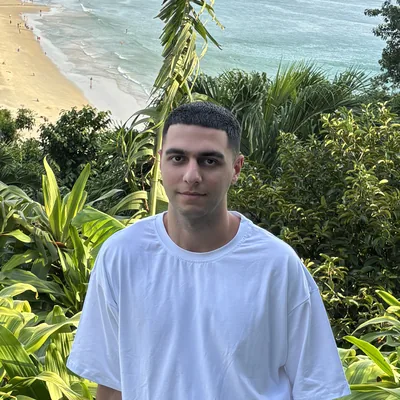
What an AI influencer is
A virtual blogger is a character who does not exist but looks and behaves like a real person: they have an appearance, a name, a personality, a topic and a social media feed. The best-known examples appeared before 2024, and in 2026 anyone can make such a character: generation models have learned to hold one face across dozens of frames.
Why you would want one:
- For a brand: a permanent face of the brand that never gets tired, never leaves for a competitor and is available for a shoot at any moment.
- For a blogger: a separate project in a niche where showing yourself is inconvenient.
- For a shop: a model for clothing and products without photo shoots.
Step 1. Invent the character
Before generating, answer these questions:
- Who they are: age, profession, city, hobbies.
- Blog topic: fashion, fitness, travel, technology, food.
- Recognisable features: hairstyle, freckles, hair colour, clothing style. 2 or 3 striking details people will recognise the character by.
- Tone: cheerful, calm, ironic.
Important: the character must be fictional. Do not make them look like a celebrity or someone you know: a person’s image is protected by law.
Step 2. Reference portraits
Generate the first portrait of the character in Nano Banana Pro:
A fictional fashion blogger, a woman of about 25, a short dark bob, light freckles, a minimalist beige outfit, sitting by the window in a sunny cafe with a cup of coffee, a natural social media style shot, soft daylight. 4:5 format.
Once you like the look, upload this portrait and make a set of reference shots: front view on a neutral background, profile, three-quarter view, full length. This is the character’s «passport», which you will upload into every subsequent generation.
More on the technique: character consistency.
Step 3. Photo content
For each post, upload 1 or 2 reference portraits and describe a new scene:
Keep the face, hairstyle and freckles of the woman in the photo unchanged. She is walking along the embankment in the evening, a light trench coat, city lights in the background. 4:5 format.
Tips:
- Keep the recognisable details in every frame.
- Change the scene, clothes and lighting, but not the age or hairstyle.
- If the face has «drifted», regenerate from the reference portrait, not from an edited frame.
Wording for scenes: prompts for Nano Banana Pro.
Step 4. Video
Videos with the character are made from a finished photo in image-to-video mode:
- Kling v3 for facial expressions, movement and speech. Holds the face well.
- Seedance 2.5 for long scenes of up to 30 seconds and several characters from references.
- Veo 3.1 for scenes with speech and detailed lighting.
If the character speaks, the speech is generated by the model together with the video: write the line in quotation marks. The voice will be synthetic, without copying a real person. More: AI talking avatar.
Step 5. Publishing and rules
- AI label. Many platforms require labelling realistic AI content and provide a special label for it. Use it: it reduces the risk of a ban.
- Russia. Labelling AI content is voluntary for users; large platforms are required to provide a way to add the label. More: AI content labelling.
- Advertising. If the character promotes a product, the ad must be labelled under the advertising law, just as with a real blogger.
- Honesty. Do not pass the character off as a real person in reviews and personal stories about a product: that is already misleading consumers.
How much it costs
| What | Contents | Approx. |
|---|---|---|
| Creating the character | 10 reference portraits, Nano Banana Pro 2K | ~250 rubles |
| Photos for a month | 30 posts, Nano Banana Pro 2K | ~760 rubles |
| Videos for a month | 8 clips of 6 s, Kling v3, 1080p, with sound | ~1340 rubles |
| Total for a month of content | ~2100 rubles |
KADR prices, October 2026. This is not a public offer. Allowing for failed attempts, budget 1.5 times more.
In short
An AI influencer can be created in an evening: invent a fictional character with 2 or 3 striking features, make a set of reference portraits in Nano Banana Pro and use them as references in every post. Make videos in Kling v3 or Seedance 2.5 from finished photos. Label AI content and label advertising. A month of content costs about 2100 rubles.